

TL;DR:
- The UK toy market is valued at £3.9 billion in 2025, with steady growth offering retail opportunities.
- Seasonal demand peaks significantly in Q4, especially around Christmas, Easter, and summer fairs.
- Bulk reselling from reputable UK wholesalers provides safer, more stable margins than volatile toy flipping.
The UK toy market is bigger and more dynamic than most people realise. UK toy market growth puts its value at £3.9 billion in 2025, with a 6% year-on-year rise that shows no signs of slowing down. For retailers, market stall vendors, and event planners, that growth represents a real window of opportunity. Buy in bulk, choose the right products, stay compliant, and you can turn a modest investment into a genuinely profitable venture. This article walks you through the market landscape, margin realities, safety requirements, and sourcing strategies you need to know before you spend a single penny.
Table of Contents
- Understanding the UK toy resale market
- Profit margins and business models explained
- Safety compliance and legal considerations
- Smart sourcing and inventory management
- A fresh perspective: why toy reselling works in the UK
- Explore wholesale toys for stalls, parties, and events
- Frequently asked questions
Key Takeaways
| Point | Details |
|---|---|
| Market growth opportunity | The UK toy market is rapidly expanding, creating profitable chances for resellers and event planners. |
| Profit margin clarity | Toy reselling delivers strong margins, particularly through bulk and novelty items during peak seasons. |
| Safety and compliance | Certified UK suppliers help you avoid legal risks and ensure products meet national safety standards. |
| Smart sourcing strategies | Effective inventory management and supplier choice directly influence your long-term success. |
| Practical business models | Bulk reselling novelty toys offers stable returns; flipping hyped products carries higher risk but can produce quick profits. |
Understanding the UK toy resale market
Let’s start with the big picture. The UK toy market is thriving, and the numbers tell a clear story. At £3.9 billion and growing, this is not a niche corner of retail. It is a mainstream, high-volume market that rewards sellers who understand its patterns. Our UK toy market guide breaks this down further for B2B buyers, but here we want to give you the full picture.
One of the most important things to understand is seasonality. Seasonal demand peaks account for 50% of all toy sales in Q4 alone, driven almost entirely by Christmas. But the spikes do not stop there. Easter, Halloween, back-to-school season, and summer fairs all create mini-surges in demand that smart resellers can capitalise on. If you run a market stall or plan community events, these are your golden windows.
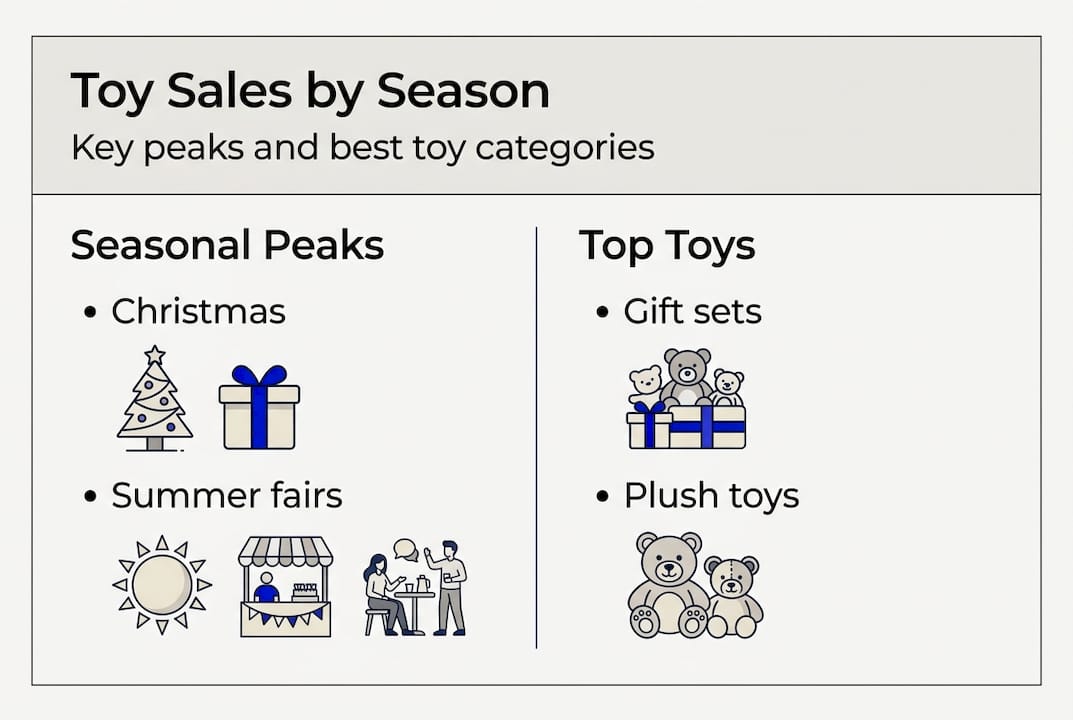
Here is a quick overview of how demand shifts across the year:
| Season | Demand level | Best toy types |
|---|---|---|
| Christmas (Q4) | Very high | Gift sets, novelty toys, plush |
| Easter | High | Prize toys, novelty fillers, eggs |
| Halloween | Moderate to high | Spooky novelties, slime, fun snaps |
| Summer fairs | Moderate | Outdoor toys, fidget items, party bags |
| Back-to-school | Moderate | Stationery novelties, small fidgets |
Social media has added a new layer of unpredictability to all of this. A toy that goes viral on TikTok in the morning can be sold out across the country by the evening. This is both an opportunity and a trap. If you spot a trend early and stock up quickly, you can ride the wave. If you buy after the hype peaks, you are left with dead stock.
The smarter, more stable play for stallholders and event planners? Focus on consistently popular categories rather than chasing viral moments. Think:
- Fun snaps and snap bangers for fairground energy
- Party bag fillers that parents buy in bulk every weekend
- Prize toys for tombolas, hook-a-duck stalls, and raffle tables
- Novelty items that create excitement without a hefty price tag
These categories have reliable, year-round demand. They are also perfect for event toy ideas where you need volume without breaking your budget. The UK toy market is not just for big retailers. There is genuinely a seat at the table for every market vendor and community event organiser who plays it smart.
Now that you understand the market potential, let’s examine how margins and different toy types affect profits.
Profit margins and business models explained
Here is where things get really interesting. Not all toy reselling is created equal, and the model you choose will dramatically affect how much you actually take home.
Toy retailers’ net margins typically sit between 10% and 20%, with gross margins ranging from 30% to 50%. Wholesale channels tend to deliver around 20-30% margins, while direct sales to consumers can push that to 45-55%. Those numbers matter because they tell you exactly where the money is.
Let’s compare the two most common approaches you will encounter:
| Business model | Typical margin | Risk level | Best suited for |
|---|---|---|---|
| Bulk novelty wholesale | 20-40% | Low to moderate | Stalls, events, party suppliers |
| Toy flipping (limited/viral) | 1.5x to 3x retail | High | Online sellers, experienced resellers |
| Direct retail (shop/market) | 30-50% | Moderate | Established retailers |
Flipping limited toys can yield between 1.5 and 3 times the original retail price during shortages, driven by social media hype and parental desperation around Christmas. But this is a rollercoaster, not a business. One bad call and you are sitting on hundreds of unsold units of something nobody wants anymore.
For most readers of this article, the bulk novelty model is where you want to be. The margins are steadier, the risk is lower, and the demand is consistent. Here is a simple way to calculate your profit on a bulk buy:
- Find your cost price per unit. Divide your total order cost by the number of units.
- Set your selling price. Research what similar items sell for at local stalls or events.
- Calculate gross margin. Subtract cost from selling price, divide by selling price, multiply by 100.
- Factor in overheads. Stall fees, transport, packaging, and time all eat into your gross margin.
- Arrive at your net margin. What is left after everything is your actual profit.
For example: if you buy 100 party bag toys at 20p each (£20 total) and sell them at 50p each (£50 total), your gross margin is 60%. After a £5 stall fee and a couple of pounds in packaging, you net roughly £23 on a £20 investment. That is a real return, achieved on a Saturday morning at a school fair.
Pro Tip: Start with your best-selling categories and run small test batches before committing to large stock orders. You will quickly learn which products fly and which sit.

Our customer attraction tips page goes deeper into the psychology of affordable pricing and how it draws in buyers at stalls and events. The core insight? When toys are priced at impulse-buy level, customers do not deliberate. They just grab and go.
With profits demystified, it is crucial to address the safety and compliance risks tied to reselling toys in the UK.
Safety compliance and legal considerations
Right, let’s talk about the bit that can make or break your business. Safety compliance is not a box-ticking exercise. It is the difference between a thriving stall and a trading standards investigation.
The numbers are stark. 90% of toys from online marketplaces fail UK safety standards, with issues ranging from choking hazards to banned chemicals. That means if you are sourcing from unverified sellers on general online platforms, you are almost certainly buying non-compliant stock. And if a child is harmed, you are liable.
“Fake toys are not just a consumer issue. They are a legal risk for anyone in the supply chain, including the person selling them at a market stall or community event.”
In the UK, toys must comply with the Toys (Safety) Regulations 2011. Post-Brexit, CE marking has been supplemented or replaced by UKCA marking for products placed on the GB market. Here is what to look for:
- UKCA or CE marking clearly displayed on the product or packaging
- Age labelling that matches the toy’s risk level
- Warning symbols for small parts, choking hazards, and electrical items
- Manufacturer or importer contact details on the packaging
- A Declaration of Conformity available from the supplier if requested
Reading through our toy safety tips gives you a solid grounding in what the regulations actually mean in practice. And our guide on wholesale supplier benefits explains exactly why buying from a reputable UK wholesaler is the safest shortcut to compliance.
If you want to go deeper on certification specifics, our breakdown of UKCA toy certification is worth a read. It explains what the marking means, how to verify it, and why it matters to your customers as much as it matters to regulators.
Pro Tip: Always ask your supplier for a product safety certificate before placing a bulk order. A reputable supplier will provide one without hesitation. If they cannot, walk away.
The practical upshot? If you buy from a certified UK wholesaler, the compliance work is largely done for you. The products arrive marked, tested, and ready to sell. That peace of mind is genuinely worth paying for, because the alternative, a trading standards visit or a recall, costs far more than any saving on dodgy imports.
Once your safety and compliance bases are covered, let’s move on to sourcing strategies for affordable toys that help you maximise resale.
Smart sourcing and inventory management
Good sourcing is not just about finding the cheapest price. It is about finding the right combination of price, reliability, safety, and consistency. These four things together are what separate thriving resellers from stressed ones.
When you are choosing a supplier, here is what to prioritise:
- UK-based fulfilment for fast, predictable delivery without import complications
- No minimum order quantities, especially when you are testing new product lines
- Consistent stock availability so you are not let down before a big event
- Transparent pricing with clear wholesale rates and no hidden charges
- Certified products with UKCA or CE marking as standard
Our sourcing toy tips article covers the practical side of building a reliable supply chain for party and event stock specifically.
Inventory management is where many new resellers trip up. It is tempting to buy big when the price is right, but dead stock is a real cost. Dimensional weight shipping is one hidden margin-killer that catches people out, particularly with lightweight plush toys that take up disproportionate box space. The shipping cost can eat your margin before the toy even reaches your stall.
Here are some practical rules to keep your inventory healthy:
- Forecast demand by season. Use last year’s sales data or industry benchmarks to estimate how much you need for Christmas, Easter, and summer fairs.
- Start small with new lines. Never buy 500 units of something you have not tested. Order a small batch first, measure how quickly it sells, then scale up.
- Negotiate return policies. A good supplier should offer some flexibility on unsold stock, particularly for seasonal items ordered in advance.
- Track your sell-through rate. Divide units sold by units purchased, multiply by 100. Aim for at least 80% sell-through before reordering.
- Diversify your range. Do not rely on one product category. A mix of party bag fillers, prize toys, and novelties gives you resilience if one line slows down.
Pro Tip: Keep a simple spreadsheet tracking what you bought, what you sold, and what remained after each event or trading period. Three months of data will reveal your best performers and your dead weight clearly.
The goal of all this is not perfection. It is steady, predictable profit without nasty surprises. You are building a repeatable system, not gambling on trends.
A fresh perspective: why toy reselling works in the UK
Here is our honest take, and it might surprise you. Most of the excitement in toy reselling circles focuses on flipping. Find the hot toy, buy it at retail, sell it at two or three times the price when stocks run out. It sounds brilliant. And occasionally, it works. But it is genuinely a terrible business model for the vast majority of people reading this.
The volatile demand and inventory risk of toy flipping means that for every success story, there are dozens of sellers sitting on boxes of last season’s craze with nowhere to put them. The window is tiny, the competition is fierce, and the margin for error is almost zero.
Bulk novelty reselling is the opposite of that. Margins are lower, yes. But the demand is real, the risk is manageable, and the opportunity repeats itself every single weekend at markets, fairs, and events across the country. If you want to understand what qualities make a good retail toy, the answer is almost never “it went viral.” It is usually “it is fun, safe, well-priced, and kids ask for it consistently.”
Safety compliance is not just a legal requirement. It is a genuine competitive advantage. Buyers and event organisers are becoming savvier about the risks of cheap imports. If you can tell a customer your stock is UKCA certified and sourced from a reputable UK supplier, that is a real selling point. Own it.
Explore wholesale toys for stalls, parties, and events
If you are ready to put all of this into practice, you are in the right place. At TC Toys, we supply certified, UKCA and CE marked toys and novelties to retailers, market stallholders, and event planners across the UK. No minimum order, fast UK delivery, and wholesale pricing that works for businesses of all sizes.
Whether you are stocking up for a summer fair, a school PTA event, or a busy market weekend, our ranges are built for exactly that purpose. Browse our event toys and supplies for ready-to-go selections, check out our market stall toys for fairground favourites, or pick through our party bag toys for affordable fillers that kids genuinely love. All products are safety-tested and compliant, so you can sell with confidence.
Frequently asked questions
How much profit can I earn by reselling toys in the UK?
UK toy retailers achieve net margins of 10-20%, with gross margins ranging from 30% to 50% depending on your business model and sales channel. Wholesale buying with direct event sales tends to deliver the strongest returns.
Why is seasonal demand important for toy resellers?
Seasonal demand peaks mean up to 50% of annual toy sales happen in Q4 alone, so timing your stock orders correctly is one of the most powerful things you can do to maximise profit.
How can I avoid legal risks when reselling toys?
Always source from certified UK wholesalers and avoid unverified online marketplace imports, as 90% fail UK safety standards and expose you to serious legal and financial risk.
What are the main risks with flipping toys versus bulk reselling?
Toy flipping carries high inventory risk and depends on volatile, unpredictable demand, while bulk novelty reselling offers steadier, lower-risk margins that suit stallholders and event planners far better.
How do shipping costs impact toy reselling margins?
Dimensional weight shipping can seriously erode your margins on lightweight or bulky products, so choosing a UK-based supplier with flat-rate or free delivery options is a genuinely smart financial decision.