

TL;DR:
- UK toy market growth is driven by collectibles, building sets, and kidult segments.
- Successful retail toys combine play value, safety, affordability, and suit target audiences.
- Ensuring compliance with CE or UKCA marks and checking safety databases is vital for risk management.
Picking the right toys to stock can feel like a guessing game. You spot something flashy, imagine kids going wild for it, order a crate, and then… it sits there. Sound familiar? Here’s the thing: many retailers chase novelty and ‘wow factor’ when the data tells a very different story. The UK toy market hit £3.9bn in recent years, and the toys driving that growth aren’t necessarily the loudest or flashiest. They’re the ones that combine genuine play value, accessible pricing, and recognised safety. This guide breaks down exactly what separates a strong retail toy from a shelf-warmer, so you can buy smarter and sell more.
Table of Contents
- Understanding today’s UK retail toy market
- Essential qualities of a good retail toy
- Safety and compliance: Non-negotiables for retailers
- Balancing value, engagement and profit: Practical retailer strategies
- Challenging assumptions: Why ‘wow factor’ alone won’t sell toys
- Find proven, affordable toys for your retail needs
- Frequently asked questions
Key Takeaways
| Point | Details |
|---|---|
| Focus on affordability | Toys priced between £8 and £15 consistently perform best in UK retail settings. |
| Prioritise play value | Multi-functional, developmental, and social play features ensure engagement and repeat purchase. |
| Never skip safety checks | Compliance with CE and UKCA standards is crucial to protect both buyers and brands. |
| Balance engagement and profit | Smart sourcing and merchandising maximise both fun for children and margin for retailers. |
Understanding today’s UK retail toy market
Let’s start with the numbers, because they’re genuinely surprising. The UK toy market grew to £3.9bn, up 3% year on year, with building sets accounting for 18% of all purchases at around £336m, and collectibles close behind at 17%. The ‘kidult’ sector, adults buying toys for themselves or as gifts, now represents a staggering 31% of total spend at £1.2bn. That’s not a niche. That’s a massive chunk of the market that many smaller retailers completely overlook.
What does this mean for you practically? It means variety matters. A stall or shop that leans too heavily on one category is leaving money on the table. The sweet spot for most retail environments sits in the affordable price bracket, which is great news if you’re running a toy stall or supplying party bags and event prizes.
Here’s a snapshot of how the market breaks down:
| Category | Market share | Typical price range |
|---|---|---|
| Building sets | 18% | £10–£40 |
| Collectibles | 17% | £5–£15 |
| Outdoor and sports | 12% | £8–£25 |
| Arts and crafts | 11% | £6–£20 |
| Kidult / novelty | 31% spend | £8–£30 |
A few things stand out from this data:
- Collectibles punch above their weight. With an average price of around £8.54, they drive repeat purchases because kids always want the next one.
- Affordable doesn’t mean cheap. Toys in the £8–£15 range consistently outperform premium items in volume sales.
- Novelty and kidult items are growing fast, making them a smart addition to any event or fair setup.
The takeaway? Stock with intention. Know which categories suit your audience and price point, and don’t be afraid to mix in some collectibles and novelty items alongside your core range.
Essential qualities of a good retail toy
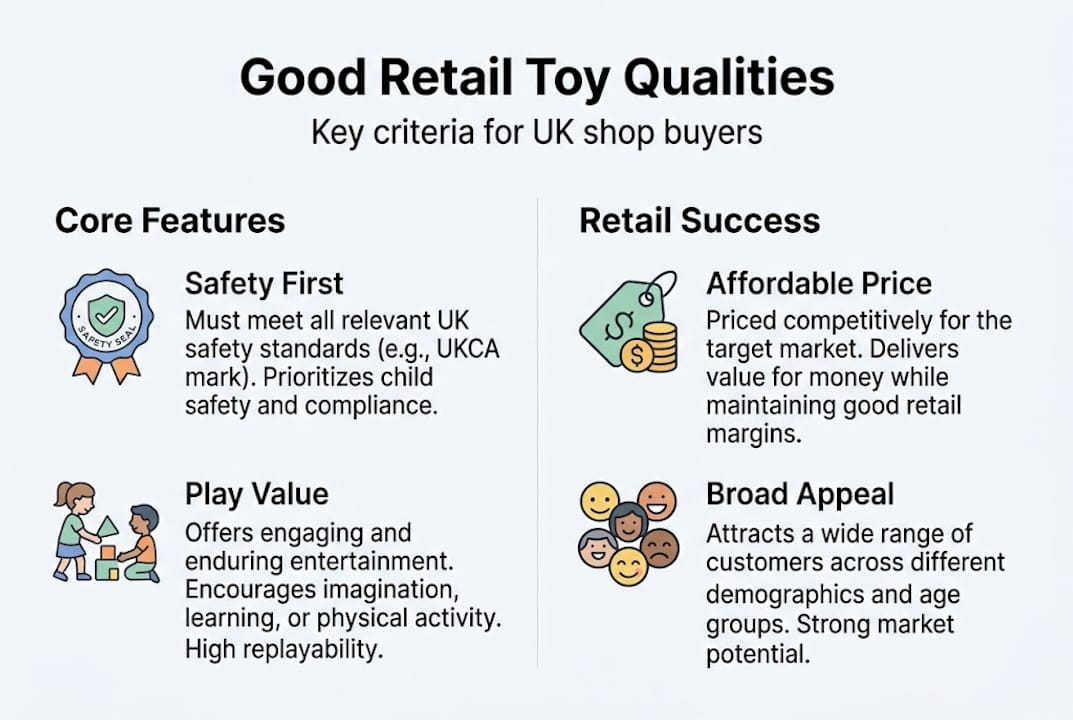
Now that you’ve got the market context, let’s talk about what actually makes a toy worth stocking. The British Toy and Hobby Association selects its Hero Toys and Dream Toys lists based on three core criteria: play value, innovation, and affordability. These aren’t arbitrary choices. They reflect what actually sells.
It helps to think about toys in three broad categories:
| Type | Description | Best for |
|---|---|---|
| Hero toys | High play value, innovative, broadly appealing | Anchor products, gifting |
| Commodity toys | Reliable, familiar, consistent sellers | Bulk buying, party bags |
| Niche toys | Targeted appeal, themed or specialist | Events, seasonal stalls |
For most retailers and event vendors, commodity and niche toys are your bread and butter. They’re predictable, they move quickly, and they don’t require a huge marketing effort. Hero toys are brilliant as display items or premium picks, but they’re not always the best bulk buy.
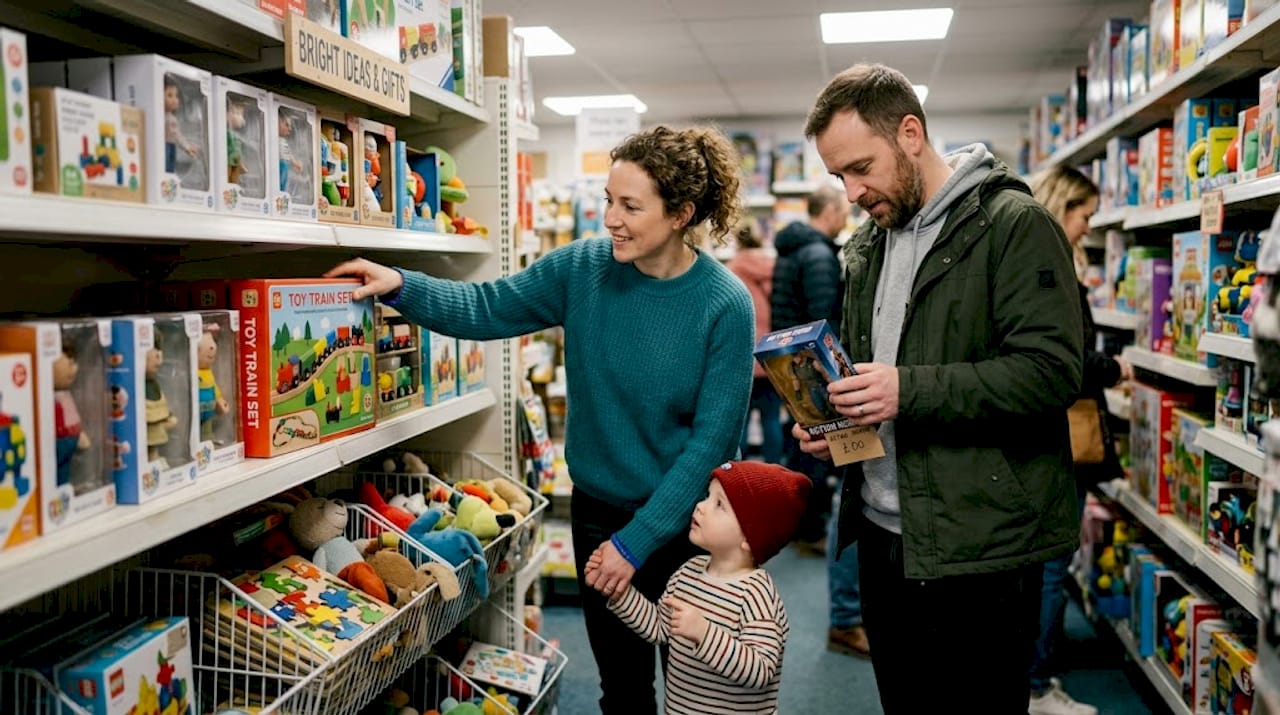
When it comes to engagement and play value, the best retail toys tend to tick several boxes at once. Multi-functional toys that can be used in different ways, options that encourage group or social play, and items that support developmental milestones in motor skills or cognitive thinking all perform consistently well.
Here’s a practical checklist you can use before placing any order:
- Does it have clear play value beyond the first five minutes?
- Is it suitable for the age range you’re targeting?
- Does it encourage interaction or social play?
- Is it priced within the £8–£15 sweet spot for your audience?
- Does it complement your existing range without duplicating it?
- Would it work as a prize toy or party bag filler?
Pro Tip: Don’t overlook the Party Success range for reliable, crowd-pleasing options that tick most of these boxes straight out of the box. These are the kind of toys that keep kids happy and keep customers coming back.
Safety and compliance: Non-negotiables for retailers
Here’s where things get serious. No matter how good a toy looks or how well it might sell, if it doesn’t meet UK safety standards, it’s a liability. Full stop.
The numbers are alarming. Around 50% of toys sourced from third-party online marketplaces are non-compliant according to BTHA research. That’s not a small risk. That’s a coin flip. And the consequences for retailers who stock unsafe toys range from financial penalties to serious reputational damage.
“Parents and retailers alike should prioritise safety marks above all else. A toy without proper certification isn’t a bargain. It’s a risk.”
So what should you actually look for? Here’s a step-by-step process:
- Check for CE or UKCA marks. These are the essential compliance marks for the UK market. UKCA marked toys confirm the product meets current British safety standards post-Brexit.
- Request documentation from your supplier. Any reputable wholesaler should be able to provide safety test certificates without hesitation.
- Check the OPSS product safety database. The Office for Product Safety and Standards maintains a recall database you can search before committing to a new line.
- Scrutinise small parts and magnets. Loose magnets and small detachable parts are among the most common hazards flagged in toy recalls. CE markings on toys provide a baseline, but physical inspection matters too.
- Be cautious with second-hand stock. If you’re ever tempted to resell pre-owned toys, check that they haven’t been recalled and still meet current standards, which may have changed since original manufacture.
Pro Tip: Build a simple supplier checklist. Before you place any new order, confirm CE or UKCA certification, ask for test reports, and do a quick search on the OPSS database. It takes ten minutes and could save you a serious headache.
Safety compliance isn’t just about avoiding fines. It’s about building trust with your customers. Parents notice. And a reputation for stocking safe, quality toys is worth far more than a short-term saving on non-compliant stock.
Balancing value, engagement and profit: Practical retailer strategies
Right, so you know what the market wants, what makes a good toy, and how to check it’s safe. Now let’s talk about making it profitable.
The £8–£15 price range is your friend. Toys at this price point sell in volume, are easy to impulse-buy, and leave room for a healthy margin when sourced wholesale. One in three Hero Toys is priced at £15 or under, which tells you everything about where the sweet spot sits for broad retail appeal.
Here are some quick wins for events, parties, and market stalls:
- Mix price points on your stall. Have a few eye-catching items at £10–£15 alongside cheaper fillers at £1–£3. The contrast makes both feel like better value.
- Bundle for perceived value. Three small toys packaged together often outsell individual items, even when the total price is higher.
- Rotate your range seasonally. Sourcing affordable toys for themed events, whether it’s Halloween, Easter, or Christmas, keeps your stall fresh and gives repeat customers a reason to return.
- Don’t neglect classics. Slime, bouncy balls, fun snaps, and novelty erasers have been selling for decades. They’re classics for a reason. Don’t chase every new trend at the expense of your reliable sellers.
- Use prize toys strategically. At fairs and events, a well-chosen prize toy draws a crowd and keeps kids engaged far longer than a passive display. Check out TC Toys best price options for bulk prize buying without blowing your budget.
The most common mistake we see? Over-investing in one trending product and neglecting the steady sellers. Trends fade. A fidget spinner craze doesn’t last forever. But a well-stocked party bag range? That’s year-round income.
Pro Tip: Keep a simple spreadsheet tracking your sell-through rate per product. After three events or a month of retail, you’ll quickly see which lines are earning their shelf space and which ones need replacing. Data beats gut feeling every time.
Also worth considering: cheap card selection and add-on novelty items can significantly boost your average transaction value without requiring much extra effort at the point of sale.
Challenging assumptions: Why ‘wow factor’ alone won’t sell toys
Here’s an opinion you might not hear often: the toys that look the most impressive at a trade show are frequently the worst performers at retail. We’ve seen it happen repeatedly. A product generates buzz, retailers order big, and then real-world kids get bored within a week. The ‘wow’ wears off fast.
What actually drives repeat sales and loyal customers? Substance. Reliable play value. Proven safety. Accessible pricing. These aren’t glamorous selling points, but they’re the ones that keep your till ringing in February, not just December.
The retailers who consistently perform well aren’t the ones chasing viral moments. They’re the ones who know their customers, stock a sensible mix of proven sellers and fresh additions, and never compromise on compliance. Think of it this way: a toy that a child plays with happily for a month is worth ten times more to your reputation than one that wows for five minutes.
If you want a reliable anchor for your range, look at prize toy ideas that combine novelty with genuine play value. That’s the combination that actually works.
Find proven, affordable toys for your retail needs
If this guide has got you thinking about refreshing your range, you’re in the right place. At TC Toys, we stock a wide variety of CE and UKCA marked, safety-tested toys built specifically for UK retailers, market stalls, and event organisers.
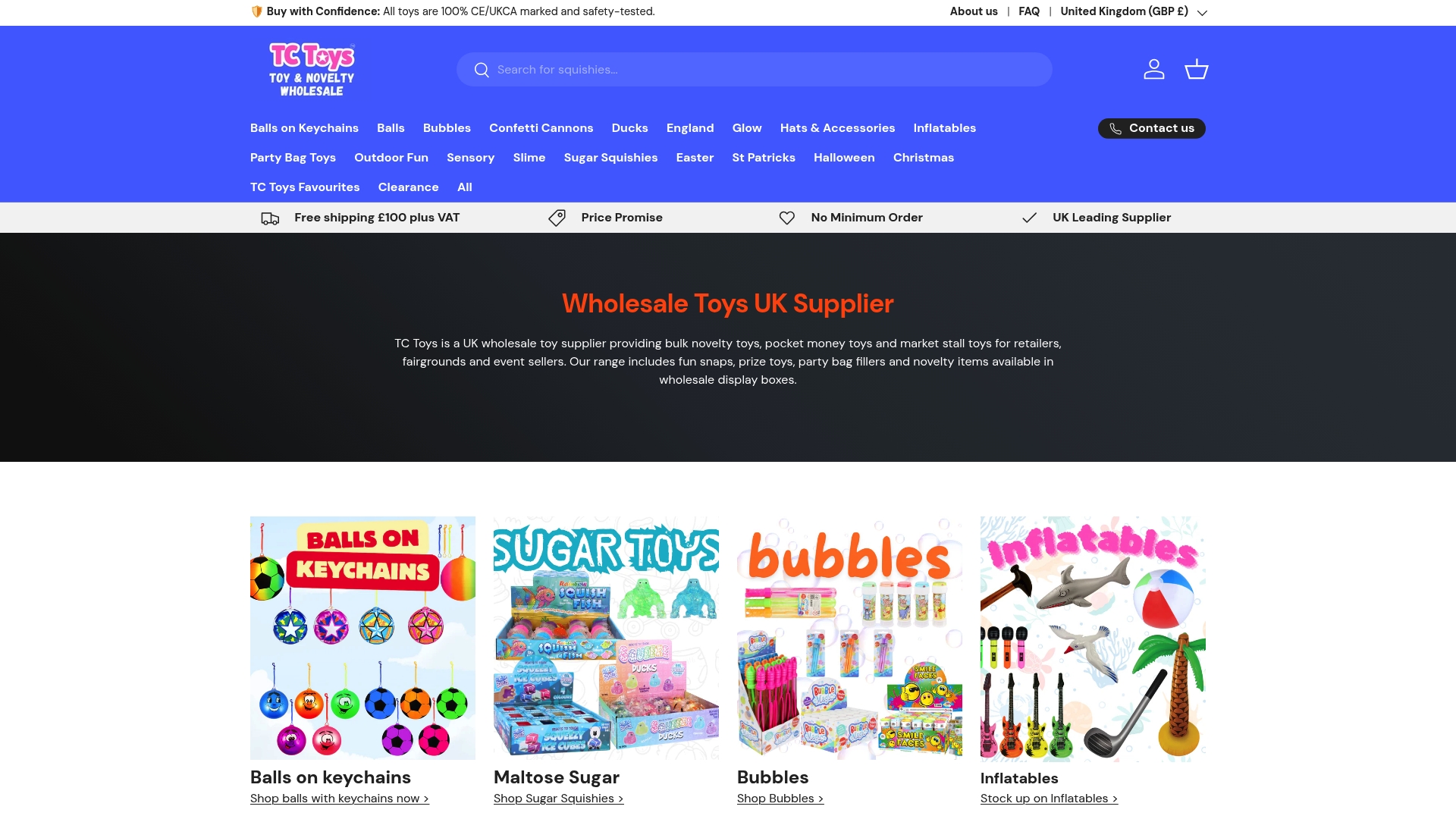
Whether you’re looking for party bag toys that kids actually get excited about, stall and fairground toys that draw a crowd, or simply the best price toys to maximise your margin, we’ve got you covered. No minimum order, fast UK delivery, and wholesale pricing that makes the numbers work. Browse the full range and find your next bestseller today.
Frequently asked questions
What is the average price range for best-selling retail toys in the UK?
The sweet spot for popular retail toys in the UK is £8–£15, with collectibles averaging around £8.54, making them ideal for driving repeat purchases.
How can retailers check if a toy is safe and compliant?
Always look for CE or UKCA marks, request safety documentation from your supplier, and check recall databases such as the OPSS product safety database before purchasing any new line.
What types of play features should retailers prioritise for engagement?
Multi-functional toys, options that encourage group or social play, and those supporting developmental milestones in motor or cognitive skills consistently perform best across retail environments.
What are common safety pitfalls when sourcing toys for retail?
Avoid unbranded toys from third-party online marketplaces, where up to 50% are non-compliant per BTHA research, and always scrutinise loose magnets and small detachable parts before stocking any new product.
Recommended
- How to run a toy stall: Step-by-step guide for UK vendors – TC Toys
- Top 7 Cheap Cards for UK Retailers 2026 – TC Toys
- Smart tips for sourcing affordable toys for children’s parties – TC Toys
- Top prize toy ideas for UK parties and events – TC Toys
- Toy gifting guide: delight and educate in 2026 – ToylandEU