

TL;DR:
- Proper registration, insurance, and toy safety compliance are essential before trading.
- Distinguish clearly between new and second-hand toys, ensuring safety standards are met.
- Proper setup, safety checks, and documentation help avoid legal issues during trading.
Picture this: it’s a sunny Saturday, your stall is packed with colourful toys, kids are grinning from ear to ear, and the cash is flowing. Brilliant, right? But here’s the thing — one missing safety mark, a lapsed insurance policy, or a surprise visit from Trading Standards can turn that dream day into a proper nightmare. Running a toy stall in the UK blends real opportunity with real responsibility. The good news is that none of it is complicated once you know what to look for. This guide walks you through every step, from pre-event paperwork to handling refunds on a busy trading day.
Table of Contents
- Planning your toy stall: What you need before you begin
- Sourcing stock: New vs second-hand toys and compliance
- Setting up at market: Stall design, safety and logistics
- The selling day: Compliance, transactions and troubleshooting
- Our perspective: What most advice misses about toy stalls
- Next steps: Sourcing stock and support for your toy stall
- Frequently asked questions
Key Takeaways
| Point | Details |
|---|---|
| Legal compliance is crucial | Every toy you sell must meet UKCA or CE safety standards or general product safety rules. |
| Insurance is essential | Public and product liability cover are mandatory for most markets and protect your business. |
| Stock carefully | Mixing new and second-hand toys offers variety but demands strict safety checks and documentation. |
| Preparation avoids pitfalls | Proper planning with registration, safety marks, and insurance prevents costly problems and lost sales. |
Planning your toy stall: What you need before you begin
Before you even think about which toys to stock, you need to get your foundations right. Think of it like building a stall out of actual wood — skip the base, and the whole thing wobbles. The legal and administrative side of running a toy stall is not glamorous, but it is absolutely non-negotiable.
Register your business first. If you are selling toys regularly, HMRC expects you to register as a sole trader or limited company. Selling occasionally as a hobby might not trigger this, but if you are turning up to markets with stock and making a profit, you are trading. Get registered and keep records of your income from day one.
Insurance is the next big one. Public liability insurance is mandatory at most UK markets, and many event organisers will ask for proof before they let you set up. Product liability insurance is equally important for toy sellers specifically, because if a child is injured by something you sold, you need to be covered. Do not assume your home contents policy stretches to cover a market stall. It almost certainly does not.
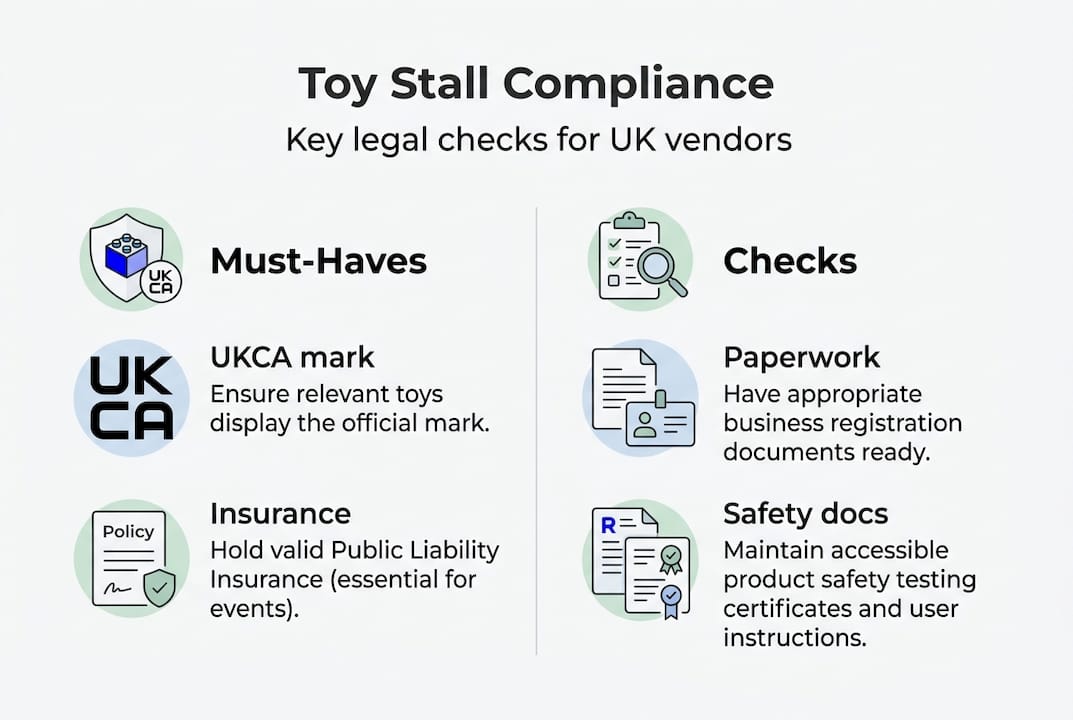
Now, let’s talk about toy safety marks. Every new toy you sell must comply with the Toys (Safety) Regulations 2011, which means it needs a UKCA or CE mark, a UK manufacturer or importer address, a batch number, and appropriate safety warnings. Toys for children under three have stricter rules around small parts and choking hazards. Functional toys with moving parts or electronics have additional requirements too. Understanding CE mark requirements before you buy stock saves a lot of headaches later.
Here is a quick summary of what you need before your first market day:
- HMRC business registration (sole trader or limited company)
- Public liability insurance (minimum £1 million cover, often £5 million required)
- Product liability insurance
- Risk assessment for your stall setup
- Proof of toy compliance (UKCA/CE marks, batch numbers, manufacturer details)
- Market organiser permit or licence
| Requirement | Why it matters | Who checks it |
|---|---|---|
| UKCA/CE mark on toys | Legal safety standard | Trading Standards |
| Public liability insurance | Protects against injury claims | Event organisers |
| Product liability insurance | Covers faulty goods claims | Your insurer |
| Risk assessment | Required by most events | Event organisers |
| Business registration | Tax and legal compliance | HMRC |
Pro Tip: Ask your event organiser for their specific requirements in writing before you book. Some markets require a £5 million liability cover minimum, while others accept £1 million. Getting this wrong means you could be turned away on the day.
For broader toy business insights and staying up to date with compliance changes, it is worth bookmarking a reliable resource so you are never caught off guard.
Sourcing stock: New vs second-hand toys and compliance
Once your paperwork is sorted, your next step is to fill your stall with toys — but not all toys are created equal in the eyes of the law. The distinction between new and second-hand stock matters enormously, and getting it wrong can lead to stock being seized and fines landing on your doormat.
New toys must carry the correct toy safety marks and full compliance documentation. When you buy from a reputable UK wholesaler, this is usually handled for you. The risk comes when you source cheaply from unverified suppliers, particularly overseas marketplaces where counterfeit or non-compliant toys are rife.
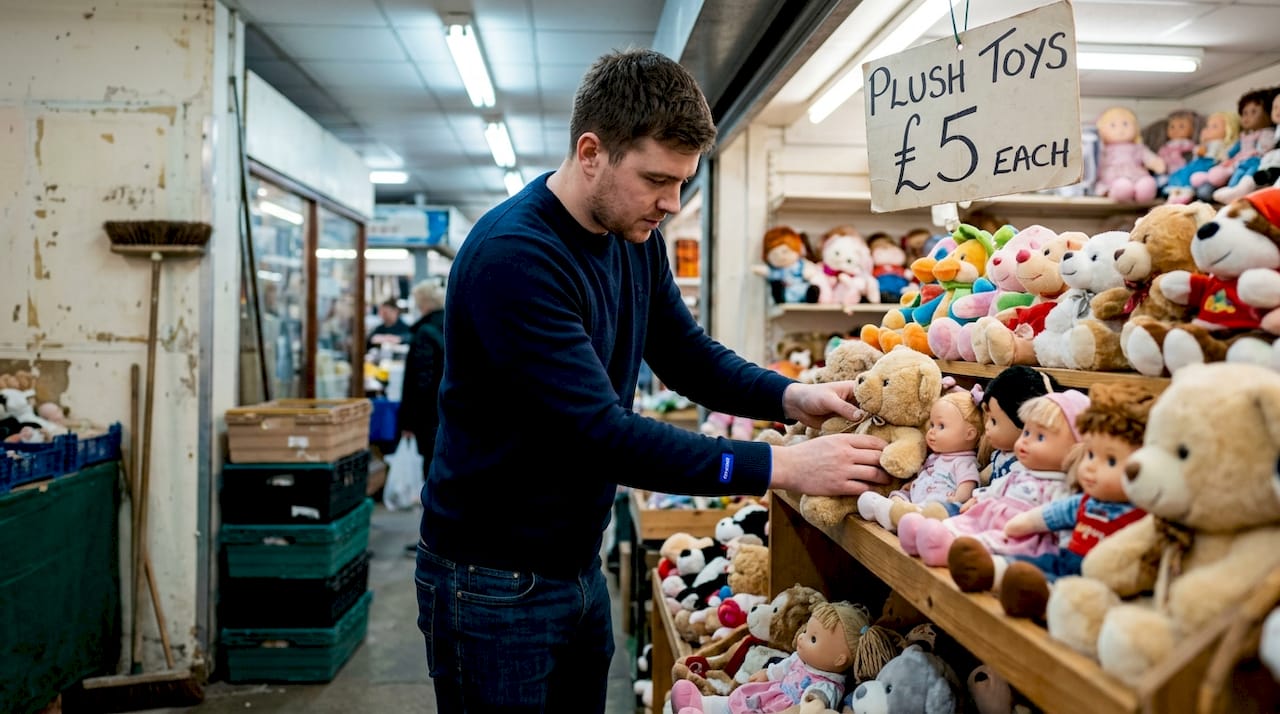
A Trading Standards raid at Barking Market is a stark reminder of what happens when unsafe toys reach market stalls. Officers seized counterfeit and non-compliant items, including unlicensed character toys. The traders involved faced serious consequences. That is not a risk worth taking.
Second-hand toys operate under different rules. They do not need a UKCA or CE mark, but they must still be safe under the General Product Safety Regulations. That means no broken parts, no exposed wires, no missing safety components, and no fire risks from electrical items. Here is a practical checklist for inspecting second-hand stock before it goes on your stall:
- Check for sharp edges, broken plastic, or loose small parts
- Test any electrical items and check for frayed wires or overheating
- Remove any items with missing batteries covers or exposed components
- Look for recalled products using the OPSS product recall database
- Keep a written record of your inspection for each batch of second-hand stock
| Feature | New toys | Second-hand toys |
|---|---|---|
| UKCA/CE mark required | Yes | No |
| Safety compliance required | Yes (Toys Safety Regs 2011) | Yes (General Product Safety Regs) |
| Documentation needed | Batch number, manufacturer info | Inspection record |
| Risk of counterfeits | High if sourcing unverified | Lower, but condition risks apply |
| Recommended action | Buy from compliant wholesalers | Inspect every item individually |
“Mixing new and second-hand toys on the same stall without clear separation and documentation is one of the most common mistakes we see from new stallholders. Keep them clearly labelled and priced separately.”
If you are running a stall at a children’s fair or school event, sticking to new, compliant stock is almost always the safer and more profitable route. Parents at those events are savvy, and a stall that looks professional and trustworthy sells more.
Setting up at market: Stall design, safety and logistics
With stock selected and legal checks complete, it is time to focus on the physical setup that attracts customers and meets safety standards. How your stall looks and functions on the day matters almost as much as what you are selling.
First, consider whether you are at a permanent indoor market or a temporary outdoor event. Permanent pitches often have fixed infrastructure, power points, and shelter. Temporary outdoor setups mean you are responsible for everything, from your gazebo to your extension leads. Both have their quirks, and both demand a proper safety audit before trading begins.
For electrical items on your stall, including any display lighting or battery-operated toys with mains chargers, PAT testing is strongly recommended and required by many event organisers. Untested electrical equipment is a fire risk, and event organisers take this seriously. If you are using a gazebo, make sure it is weighted or pegged down properly. A collapsing gazebo at a busy market is both dangerous and deeply embarrassing.
Here are the key physical setup considerations to work through:
- Position your stall so there are no trip hazards (cables taped down, bags stored away)
- Keep toys at child-friendly heights where possible to encourage browsing
- Use clear price labels on every item — unlabelled goods create disputes
- Display age warnings prominently, especially for toys not suitable for under threes
- Ensure your stall structure is stable and will not tip or collapse under pressure
- Have a small first aid kit accessible behind your stall
Pro Tip: Bring a small toolkit on the day: cable ties, gaffer tape, zip ties, and a spare tarpaulin. Markets have a way of throwing unexpected weather or setup challenges at you, and being prepared means you spend less time panicking and more time selling.
Signage matters more than most new stallholders realise. Your business name should be visible, and any promotional signs must not make misleading claims. Phrases like “100% safe” or “guaranteed non-toxic” without evidence to back them up can get you into trouble with Trading Standards.
The selling day: Compliance, transactions and troubleshooting
Stall set up and ready, the final challenge is running a smooth trading day while staying on the right side of the law. The selling day is where preparation pays off, or where gaps in your planning start to show.
Start with a pre-opening inspection. Walk around your stall and check that all toys on display have visible safety marks, that price labels are in place, and that nothing has shifted during setup in a way that creates a hazard. It takes five minutes and it could save you a lot of bother.
Here is a numbered checklist for your pre-opening routine:
- Confirm all displayed toys have UKCA or CE marks visible
- Check age restriction labels are displayed on relevant items
- Verify your insurance documents are accessible (not buried in a bag)
- Ensure your stall structure is secure and stable
- Have a cash float ready and a method for recording sales
- Keep a copy of your risk assessment on hand
Consumer laws on refunds apply to market stalls just as they do to high street shops. If a toy is faulty, the customer has the right to a refund or replacement. You cannot display a “no refunds” sign and expect it to hold up legally. Having a clear, polite returns policy and a small float for refunds keeps disputes from escalating.
If Trading Standards officers visit your stall, stay calm and be cooperative. Present your safety documentation, insurance certificates, and any supplier invoices you have. Non-compliant or counterfeit toys will be seized, and you could face a fixed penalty or prosecution. Honest traders with proper paperwork rarely have anything to worry about.
Busy periods can get chaotic, especially at children’s events. Keep your stall tidy throughout the day, restock neatly, and watch for toys that have been opened or tampered with by curious little hands. Damaged stock should be removed from display immediately.
Our perspective: What most advice misses about toy stalls
Most compliance guides hand you a checklist and call it done. What they rarely mention is how differently the rules feel in practice depending on where you are trading.
Permanent market pitches give you consistency but can breed complacency. Stallholders who trade in the same spot every week sometimes stop checking their documentation because nothing has gone wrong yet. Then a new event organiser arrives with stricter requirements, or Trading Standards runs a sweep, and suddenly the routine trader is the one scrambling.
Temporary event stalls bring the opposite problem. The chaos of setup, the unfamiliar layout, and the time pressure mean that safety checks get rushed or skipped entirely. We have seen stallholders arrive with stock they have not fully inspected because they were packing at midnight the night before.
Mixing new and second-hand toys on the same stall without clear separation is another trap. It looks messy to customers and raises immediate red flags for inspectors. Keep them clearly divided, labelled, and documented.
The honest truth is that most traders who get into trouble are not dishonest. They are just underprepared. The regulations exist to protect children, and once you frame it that way, the paperwork feels a lot less like a burden and a lot more like part of the job.
Next steps: Sourcing stock and support for your toy stall
Armed with step-by-step know-how, you need quality stock and reliable backup to truly thrive in the UK toy market.
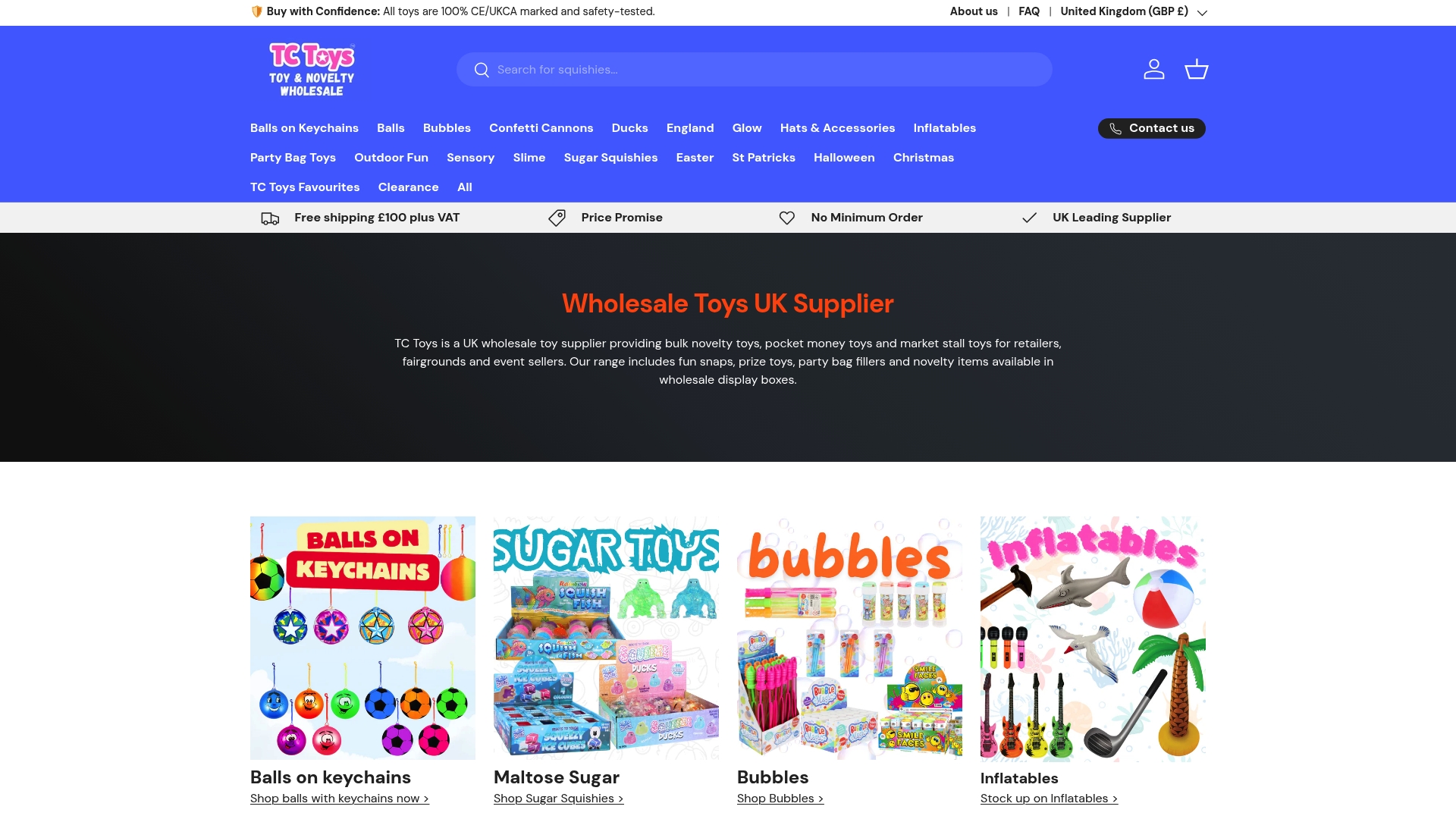
At TC Toys, we supply wholesale toy options that are CE and UKCA marked, safety-tested, and ready to sell. Whether you are stocking up for a school fair, a regular market pitch, or a seasonal event, our range covers everything from fun snaps and prize toys to party bag fillers and novelty items. We also carry brilliant add-ons like paper party bags and sensory puzzle toys that always go down a treat with kids. No minimum order, fast UK delivery, and wholesale pricing that makes your margins work. You have got this.
Frequently asked questions
Do I need insurance to run a toy stall at UK markets?
Yes, public liability insurance is usually mandatory and many events require proof before allowing you to trade. Product liability cover is also strongly recommended for toy sellers.
Can I sell second-hand toys without a UKCA or CE mark?
Yes, but second-hand toys must still be safe and comply with general product safety rules even if they do not need a UKCA or CE mark.
What if Trading Standards inspect my stall?
Stay calm and present all your safety documentation. Non-compliant toys may be seized and you could face penalties, so keeping paperwork in order is your best protection.
Are refunds required for toy stall purchases?
Yes. Consumer laws on refunds apply to market stalls just as they do to shops, so you must honour refunds for faulty goods under UK consumer law.